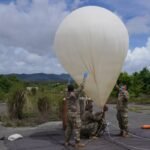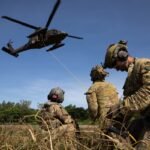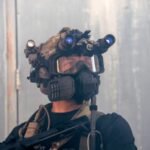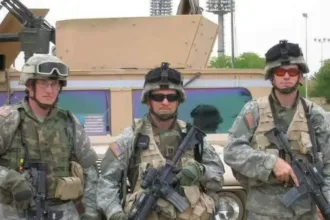
Muted American flag patches on the right shoulders of camouflage-clad men and women in the jungle are one sign of an expanding partnership between the U.S. and Panama. American optometrists in the country’s Darién Province are another. U.S. military salvage and dive teams training near the Panama Canal offer a third.
As Washington shifts its attention toward the Western Hemisphere, a reinvigorated jungle school is just one part of the evolving U.S. military presence in Panama.
More than 20 years after the U.S. turned over its bases to the Central American country, the partnership offers a glimpse of what the Pentagon’s renewed focus on its own hemisphere could mean on the ground.
“The Western Hemisphere is now the priority hemisphere,” Col. Jacob White, deputy commander of Joint Security Cooperation Group-Panama (JSCG-P), said in an interview from the unit’s Panamanian headquarters. “We want to move faster and be more present down in this hemisphere.”
Decades after the U.S. launched a deeply polarizing invasion to topple Panamanian dictator Manuel Noriega, the disparate missions are part of the U.S.’s increasingly prioritized relationship with the country that hosts the only land bridge connecting the two American continents and the only waterway connecting the Atlantic and Pacific.
The Trump administration, and thus the Pentagon, has elevated “defense of the U.S. Homeland” to the highest national security priority, downgrading China — which previously took the top spot — as a threat.
In April 2025, the U.S. and Panama announced an agreement to counter Chinese influence in the region and secure the Panama Canal, laying the foundation for other joint activities.
According to Henry Ziemer, a fellow with the Americas Program at the Center for Strategic and International Studies, Panama never stopped being important to the U.S. military.
It has the strategically important Panama Canal and Darién Gap, and the country sits at the intersection of some of the Trump administration’s major priorities: canal security, migration and drug trafficking.
Over the last year, Ziemer said, Panama’s importance has increased “as we’ve seen supply chain disruptions at other critical waterways like the Strait of Hormuz.”
Roughly 5% to 6% of global trade passes through the waterway, with approximately 70% of that traffic passing to or from the United States.
“For many subsequent administrations and decades, I think the United States took [its] eye off this neighborhood, off the Western Hemisphere,” said Kevin Marino Cabrera, the U.S. Ambassador to Panama, emphasizing that developments in the region have direct impacts for the U.S.
“You can’t talk about migration without talking about Panama,” he said, referring to the Darién Gap, which at its peak saw more than half a million migrant crossings per year. Panamanian service members also report drug smuggling through the narrow strip of land.
From the U.S.’s perspective, the “border begins in Panama,” Ziemer said, adding “it’s a lot easier to secure the Isthmus of Panama than it is to secure the whole Southwest land border, right?”
Cabrera said the partnership was mutually beneficial, though, as Panama also deals with cartels, drug trafficking and migration issues — though differently than the U.S.
“Our plan is to defeat the cartels, to maintain the Darién closed, so that we can secure the U.S. Southern border and keep our communities safe,” he said, adding, “we’re working together with Panama because they have many of the same goals.”
Though the gritty terrain of jungle school makes it a highlight of the partnership, the U.S. military’s inroads in Panama extend well beyond the boundaries of Aeronaval Base Cristóbal Colón, where course is housed.
Typically a country may host a U.S. Army Civil Affairs team or two — the Army’s special operations forces contingent that connects military forces with civilian populations — but Panama is home to an entire U.S. Civil Affairs company, White said, that works in virtually every district.
Those teams, he said, identify gaps in civilian infrastructure, such as dilapidated schools or unsafe bridges. The U.S. has military salvage dive teams operating around the canal and cross-training with Panamanian forces. Engineer soldiers rotate through the country, building out structures for jungle students.
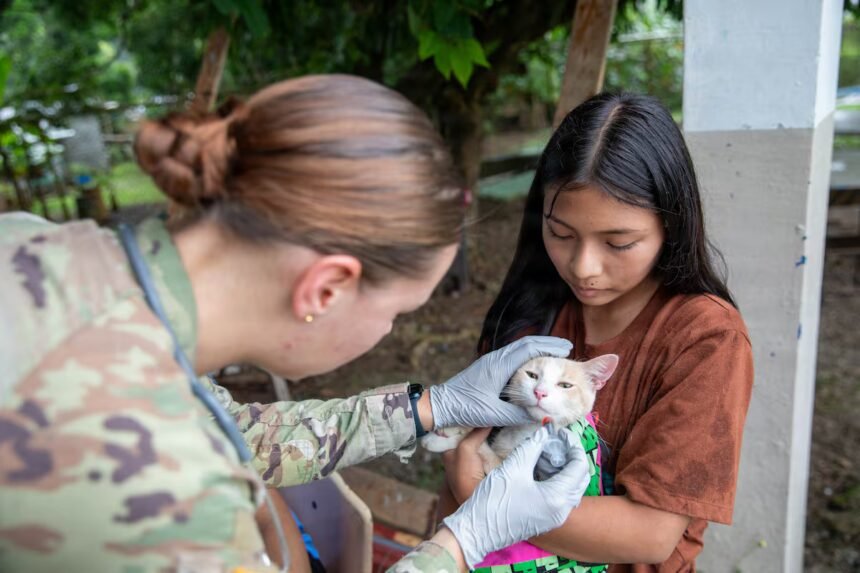
Military doctors work alongside Panamanian medical professionals to assist local populations, performing colonoscopies and cataract surgeries. Dentists and optometrists — even veterinarians — rotate through rural parts of the country.
White said one of the lessons the U.S. learned during its decades-long wars in Iraq and Afghanistan was that the military cannot quickly create trust.
“In a crisis, you simply can’t surge trust,” he said. “And so, being here — present — doing things on the regular with SENAFRONT and SENAN, with the government of Panama — and with their permission to do it — it helps build that trust.” Though Panama does not have a standing Army, SENAFRONT and SENAN are two branches of the Panamanian Public Forces.
On a tactical level, Panamanian instructors at the jungle school say the course, which includes Panamanian and U.S. soldiers, makes them feel that, in an emergency, U.S. soldiers would at least grasp how challenging it is to operate in a jungle environment.
With terrain different from the U.S.’s Hawaii jungle course, Panama’s environment replicates other jungle biomes where the U.S. may find itself in conflict. The Western Hemisphere, White said, abounds with jungle landscape.
But as the U.S. hones its focus on Central and South America, expanded U.S. activity inevitably raises questions about sovereignty. Decrepit military quarters line roads in and out of Aeronaval Base Cristóbal Colón, which the U.S. called Fort Sherman when it occupied it. Most sit abandoned, used only as shady hideaways for jungle instructors between missions.
Officials have been adamant that the future does not hold permanent military basing for U.S. troops. White said the U.S. contingent works to uphold the Neutrality Treaty of 1977 — which guarantees the Panama Canal remains neutral and open for ships of all nations to transit peacefully. To do that, he said, the U.S. military is operating “by, with and through the Panamanians.”
Eve Sampson is a reporter and former Army officer. She has covered conflict across the world, writing for The New York Times, The Washington Post and The Associated Press.