Americans tend to understand military life through two familiar frames.
There is training, often portrayed as brutal, transformative and loud in films like “Full Metal Jacket,” which has become shorthand for how civilians imagine the making of a service member. Then there is combat, depicted as chaotic and decisive in movies such as “Black Hawk Down” or “American Sniper.”
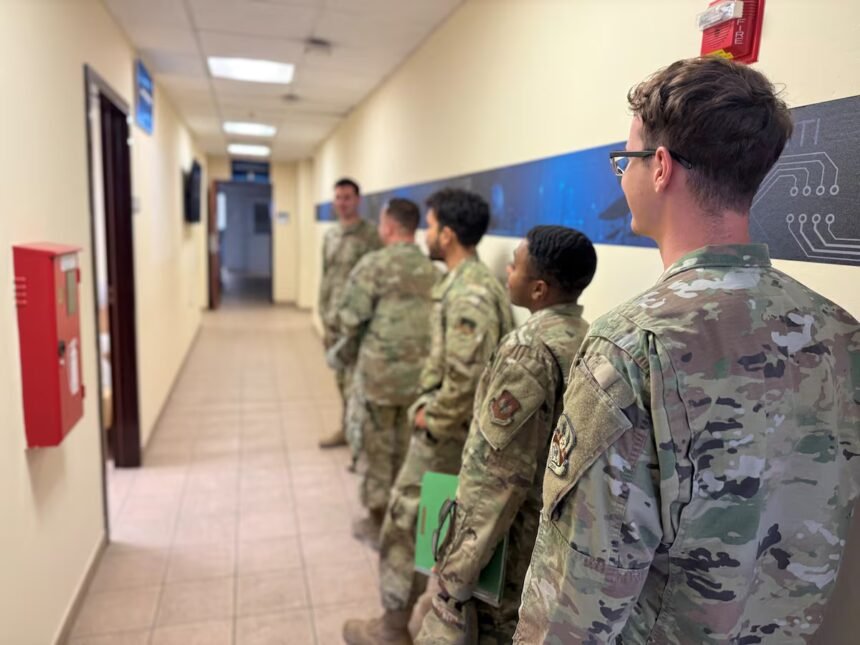
These stories dominate popular culture, but they leave out where most of military life actually happens. Between training and combat exists a long stretch of routine, waiting, repetition and administrative work that defines daily service for millions of troops.
That routine majority of military life remains largely absent from how the military is portrayed, and its absence shapes how civilians view service and how veterans understand their own experience.
For most of my time in uniform as a public affairs noncommissioned officer and a National Guard soldier, my days were not filled with action or drama. They were filled with calendars, schedules, briefings and forms. I coordinated media visits that ultimately did not result in coverage. I stood in formation in weather that never made a movie montage. I wrote releases about training events that looked impressive on paper but felt painfully ordinary in reality.
I spent hours waiting for vehicles to move, for radios to work, for someone higher ranking to make a decision.
None of that fits neatly into a two-hour runtime, yet it is how a majority of service members spend their service.
Popular culture tends to avoid this middle ground because it resists clean storytelling. Training has a clear beginning and end. Combat has obvious stakes. Routine does not. It is ongoing and unresolved by design. That does not mean it lacks meaning; it means meaning is built slowly through shared experience rather than singular moments.
Some works have tried to capture this. The HBO miniseries “Generation Kill” is often cited by veterans because it shows long stretches of confusion, boredom, gallows humor and frustration during the early days of the Iraq War. Much of the series focuses not on firefights but on broken vehicles, unclear orders and young Marines arguing about music and leadership.
That depiction felt honest because it reflected how military operations actually unfold for those living them.
Even films that attempt to address boredom are often misunderstood. “Jarhead” tried to show the frustration of a generation of Marines trained for combat and then denied it during the Gulf War. Much of the film is about waiting, sexual tension, resentment and the psychological strain of being prepared for violence that never comes.
When it was released, some audiences criticized it for lacking action, which only reinforced the idea that military stories are expected to deliver combat or risk being dismissed.
Failure to portray what most troops actually experience day to day has real consequences.
Civilians often struggle to understand why service members describe their time in uniform as exhausting, even if they never saw combat. Families sometimes expect a clear narrative of trauma or triumph when what their loved one experienced was years of disrupted routines, missed holidays and constant low-level stress.
Veterans themselves can feel disconnected from public recognition when their service does not match the narrow stories society celebrates.
In the National Guard, this gap is even more pronounced. Much of Guard service happens far from public view. Drill weekends are spent conducting inventory, updating training requirements and preparing for contingencies that may never occur. Annual training often feels anticlimactic to outsiders despite being physically and mentally demanding.
These experiences rarely make headlines, yet they represent the bulk of how the Guard contributes to readiness and domestic response. When pop culture ignores this reality, it also ignores the legitimacy of that service.
Some documentaries have come closer to capturing this truth. “Restrepo,” which follows a platoon deployed to Afghanistan, is often remembered for its intensity. What stands out to veterans, however, are the quiet moments. Soldiers smoking, cleaning weapons, talking about home and waiting for something to happen. Those scenes communicate more about military life than any explosion.
The dominance of combat-focused narratives also shapes policy conversations. Discussions about veteran mental health often center on combat trauma alone. While combat exposure is a critical factor, it is not the only one. Years of sustained stress, lack of control over daily life and the constant postponement of normal milestones all take a toll. Those pressures are harder to explain when popular culture does not give them language or visibility.
I remember sitting through safety briefs that lasted longer than the training they preceded. I remember writing press releases late at night because someone deserved recognition, even if no one outside the unit would ever know. I remember the pride of seeing a plan executed smoothly, precisely because nothing dramatic happened.
Those moments taught me responsibility and patience. They taught me how institutions function and how people carry weight quietly. They are not lesser experiences because they lack spectacle. They are foundational.
There is room in American culture to tell these stories.
Audiences have embraced shows and films in other genres that focus on the ordinary rather than the extraordinary. Military storytelling does not need to abandon combat narratives to evolve. It needs to widen the lens. By acknowledging everyday military life, storytellers can present a more accurate and humane picture of service. Civilians gain understanding. Veterans see themselves reflected honestly. The military is no longer reduced to a highlight reel.
Observation Post is the Military Times one-stop shop for all things off-duty. Stories may reflect author observations.