Start your day with the latest breaking Military, Army, Trucking, and Transportation news.

TransPress
  • Home
  • News
  • Army
    • Education & Transition
    • Military Honor
    • Off Duty
    • Pay & Benefits
    • Veterans
  • Trucking
    • Business
    • ELDs
    • Equipment
    • Regulations
    • Trucking Law
Subscribe
TransPressTransPress
Search
  • Home
  • News
  • Army
    • Education & Transition
    • Military Honor
    • Off Duty
    • Pay & Benefits
    • Veterans
  • Trucking
    • Business
    • ELDs
    • Equipment
    • Regulations
    • Trucking Law
  • About Us
  • Contact
  • Privacy Policy
  • Terms of Service
© 2026 Randall Reilly Talent, LLC. All rights reserved.

Urine test could predict stress fractures in boot camp

August 12, 2026
4 Min Read
Share
Urine test could predict stress fractures in boot camp


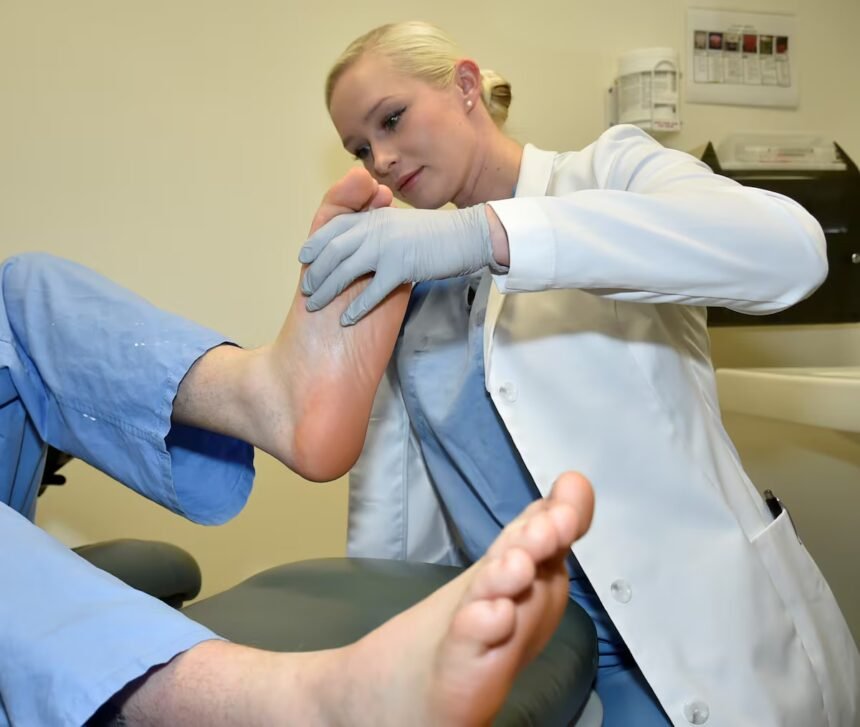
A new $3.4 million Pentagon grant to two universities aims to help solve the thorny problem of military recruits getting sidelined with stress fractures.

The grant, which covers four years, was awarded to Rosalind Franklin University in Illinois and Old Dominion University in Virginia. According to a release from Rosalind Franklin, bone-stress injuries affect up to 8% of military recruits across the services and cost the Department of Defense about $100 million per year in medical expenses alone.

“Because suspected stress fractures often require serial clinical visits, radiographs, MRI and bone scans, there is a strong operational and economic incentive to improve early diagnosis and risk stratification,” school staff said in the release.

The objective of the grant is to develop a “clinically actionable” test that flags biomarkers in urine, creating a non-invasive way to detect bone-stress injuries in the legs before they lead to fractures and other more severe, sidelining conditions.

“[Bone stress injuries] are a major challenge to military readiness,” Shawn Flanagan, director of the Human Performance Laboratory at Rosalind Franklin’s Center for Lower Extremity Ambulatory Research (CLEAR), said in a statement. “By combining cutting-edge proteomic methods with access to large, well-characterized military cohorts, we aim to create a biomarker panel that safeguards recruits and enhances operational performance.”

Founded in 2004, CLEAR is a leading center for research to make “measurable improvements in the health and function of the lower extremities,” according to its website, with specialties in diabetic complications and biomechanics.

The team of researchers, which, according to releases, will include military professionals and experts in proteins, musculoskeletal physiology, bone imaging and military health, will study cohorts of military recruits over time to validate testing panels, and include gender-specific analyses to evaluate any differences between male and female recruits.

The release does not say where the research will be conducted or what services will be involved.

The new research grant comes on the heels of military research that expands what’s known about military stress fractures and who’s most at risk. A Uniformed Services University study published in the Journal of Military Medicine in June assessed 446 patients at Walter Reed National Military Medical Center who sustained a total of 537 stress fractures over three years.

It found that recruits were more likely than longer-serving service members to sustain leg and pelvis fractures, but less likely to sustain foot fractures. New recruits were also significantly more likely than other groups to sustain multiple stress fractures.

“Providers may consider having a lower threshold for imaging new recruits with hip pain as this could identify a stress reaction before it becomes a stress fracture,” the study concluded.

The prospect of a non-invasive test that flags biomarkers for stress fractures is all the more appealing because they can be difficult to confirm with conventional approaches.

“[Bone stress injuries], particularly hips, can be tricky to diagnose as the pain level doesn’t always equal the severity level, and X-ray imaging doesn’t always show early BSI,” Army Maj. Gary Helton, assistant chief of the Fort Jackson Department of Sports Medicine, said in a 2025 release. “Tibial BSIs, and hip BSIs, particularly the femoral neck, can lead to a complete fracture needing surgery if not addressed in a timely manner.”

An ongoing Army study aims to identify trends and risk factors for BSIs, giving providers more opportunities to prevent severe injuries through better evaluation techniques.

Share This Article
Facebook Copy Link Print
Previous Article Cargo theft loss values skyrocket | Latest truck, trailer recalls Cargo theft loss values skyrocket | Latest truck, trailer recalls
Next Article Blame the ambulance chasers for C.H. Robinson's $604M verdict: Owner-op Blame the ambulance chasers for C.H. Robinson’s $604M verdict: Owner-op
Leave a Comment Leave a Comment

Leave a Reply Cancel reply

Your email address will not be published. Required fields are marked *

Your daily briefing on the latest Military, Defense, Trucking, and Transportation news.

Stay Updated

Get the latest up to date headlines, for the Military, Army, Trucking and Defense community here with us first.

- Advertisement -
Ad image

Army pivots from WWII-era ammo cans toward polymer cases, 3D printing

As supply pipelines become more risky and tenuous, the Army is rolling out what it’s…

September 2, 2026

Secretary Duffy calls out ELD cheats for driving down rates

Department of Transportation Secretary Sean Duffy called out electronic logging device cheaters during the recent…

September 2, 2026

C.H. Robinson verdict: Blame jury and judge, not ‘ambulance chasers’

I was a federal prosecutor for 27 years and a defense attorney for five. Tired…

September 2, 2026

Semi truck ruptures own air line attempting u-turn through I-5 median 

A semi truck was left blocking Interstate 5 after the driver attempted a u-turn through…

September 2, 2026

Explore

Pentagon wants to use AI-generated ‘personalities’ for decoy cellphones
September 4, 2026
Bill to crack down on carriers that operate under inactive USDOT numbers
September 4, 2026
Unexpected hiring surge drives down unemployment rate for post-9/11 veterans
September 4, 2026
New legislation would criminalize all staged crashes at federal level
September 4, 2026
Adam Telle, former Senate staffer, now acting Army secretary
September 4, 2026

You Might Also Like

They survived an Iran war drone attack. Six months later, they’re struggling to get care.

They survived an Iran war drone attack. Six months later, they’re struggling to get care.

News
DoD schools struggle to identify, support military children with learning disabilities, GAO finds

DOD schools struggle to identify, support military children with learning disabilities, GAO finds

News
CDL schools call out 'deluge of bad actors' in training, applaud DOT, DHS crackdown

CDL schools call out ‘deluge of bad actors’ in training, applaud DOT, DHS crackdown

News
FMCSA proposes removing nation's biggest CDL schools amid crackdown

FMCSA proposes removing nation’s biggest CDL schools amid crackdown

News
TransPress

Resources

  • Army
  • News
  • Trucking
  • Business
  • Regulations
  • Trucking Law

Helpful Links

  • About Us
  • Contact
  • Privacy Policy
  • Terms of Service

Popuplar

Drivers wade slowly into new HOS options, ELD makers report
Pentagon wants to use AI-generated ‘personalities’ for decoy cellphones
ELD makers, like drivers, navigating new HOS regs

Your trusted source for breaking news, insider reporting, and the latest developments shaping the military, trucking, transportation, and defense industries.

© 2026 Randall Reilly Talent, LLC. All rights reserved.

Welcome Back!

Sign in to your account

Username or Email Address
Password

Lost your password?