Start your day with the latest breaking Military, Army, Trucking, and Transportation news.

TransPress
  • Home
  • News
  • Army
    • Education & Transition
    • Military Honor
    • Off Duty
    • Pay & Benefits
    • Veterans
  • Trucking
    • Business
    • ELDs
    • Equipment
    • Regulations
    • Trucking Law
Subscribe
TransPressTransPress
Search
  • Home
  • News
  • Army
    • Education & Transition
    • Military Honor
    • Off Duty
    • Pay & Benefits
    • Veterans
  • Trucking
    • Business
    • ELDs
    • Equipment
    • Regulations
    • Trucking Law
  • About Us
  • Contact
  • Privacy Policy
  • Terms of Service
© 2026 Randall Reilly Talent, LLC. All rights reserved.

How chocolate became one of the US military’s most important WWII rations

February 14, 2026
4 Min Read
Share
How chocolate became one of the US military’s most important WWII rations


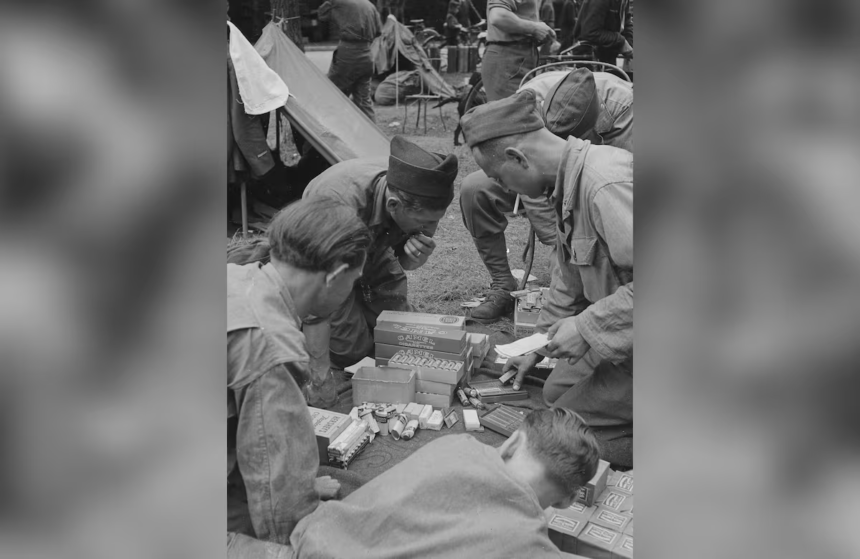
In the early American military, specifically the Continental Army during the Revolutionary War, food, logistics, medicine and morale were inseparable. Chocolate and cocoa fit that world neatly. They were calorie-dense, easy to transport and more shelf-stable than most comforts soldiers could count on.

By the middle years of the Revolutionary War, chocolate was part of the ecosystem of soldiering, consumed as a hot beverage and valued for energy when supply lines snapped, or pay fell behind. The Smithsonian Institution notes that Americans have been consuming chocolate since colonial times and points to the Continental Army’s use of it during the Revolution, as detailed in its examination of chocolate as a fighting food.

Even then, chocolate’s value was not only nutritional. It was psychological, a reminder that life extended beyond cold marches and unappetizing food.

That psychological dimension became unavoidable once the U.S. military entered World War II and attempted to feed a global force at industrial scale. The Army Quartermaster Corps needed food that could survive every environment, fit inside a pocket and perform predictably under stress, priorities documented by the Smithsonian’s research on wartime ration development. Chocolate was an obvious candidate, but the version soldiers wanted and the version logisticians needed were not the same thing.

In 1937, the Army approached the Hershey Company with a blunt request: Create a bar that was high in calories, compact, heat resistant and intentionally unpleasant. The goal was to ensure troops did not eat an emergency ration out of boredom. The result was Field Ration D, which the Hershey Community Archives describes as a purpose-built survival food, rather than a morale item.

The bar’s reputation was earned. It was dense, bitter and designed to be eaten slowly, delivering roughly 600 calories per serving. Army specifications required that it taste only “a little better than a boiled potato.” Soldiers did not need to enjoy it. They needed it to exist when everything else failed.

Then the Pacific happened.

Heat and humidity erased margins for error. Even though rations became liabilities, the Army’s needs shifted from merely heat resistant to reliably heat proof. In 1943, Hershey developed the Tropical Chocolate Bar, designed to withstand extreme temperatures while improving flavor to be more palatable.

World War II forced planners to acknowledge a simple truth: a soldier’s willingness to eat matters. While emergency rations like the D ration were intentionally unpleasant to ensure they were saved for survival, chocolate in other forms served a different role, offering quick energy and a brief sense of normalcy alongside rations designed strictly for endurance.

The same tension continues to shape modern ration design, driven by weight limits, packaging constraints and feedback from service members.

Chocolate’s rise from colonial drink to engineered survival ration mirrors the evolution of the U.S. military itself. Early America used it because it was available and useful, while World War II transformed it into a system defined by specifications, testing and mass production. Across centuries and conflicts, the lesson remained consistent: calories keep you moving, and morale helps you keep going.

Share This Article
Facebook Copy Link Print
Previous Article This Army Motor T operator is also an Olympic figure skater This Army Motor T operator is also an Olympic figure skater
Next Article Robert Duvall, ‘Apocalypse Now’ actor and Army veteran, dead at 95 Robert Duvall, ‘Apocalypse Now’ actor and Army veteran, dead at 95
Leave a Comment Leave a Comment

Leave a Reply Cancel reply

Your email address will not be published. Required fields are marked *

Your daily briefing on the latest Military, Defense, Trucking, and Transportation news.

Stay Updated

Get the latest up to date headlines, for the Military, Army, Trucking and Defense community here with us first.

- Advertisement -
Ad image

CNG the ‘future of trucking’: Kevin Campbell on his best move yet

Wisconsin-headquartered Kevin Campbell's operating with a distinct advantage over most owner-operators and fleets trucking-wide. With…

October 29, 2026

FMCSA will ‘hold violators fully accountable’ for ELD fraud

The Federal Motor Carrier Safety Administration vowed action after a motor carrier confronted its investigators…

October 28, 2026

Police catch seven commercial vehicles in violation of Ontario’s speed limiter mandate

Multiple truck drivers and carriers face charges after the Ontario Provincial Police (OPP) caught them…

October 28, 2026

FMCSA’s complaint system renamed | Recall hits KWs, Petes, Volvos

Trucking news and briefs for Wednesday, Oct. 28, 2026:FMCSA unveils new name for complaint databaseThe…

October 28, 2026

Explore

Authorities ask truckers for help catching escaped inmate who may have visited Illinois truck stop
October 31, 2026
North Dakota troopers ask motorists to use caution passing after SUV strikes turning commercial vehicle
October 30, 2026
FMCSA Safety Chief touts Motus success despite struggles
October 30, 2026
Kentucky troopers find 'numerous tire-related issues' at I-24 scale facility
Kentucky troopers find ‘numerous tire-related issues’ at I-24 scale facility
October 30, 2026
Border Patrol busts car hauler for smuggling | Peterbilt founder honored
October 30, 2026

You Might Also Like

‘American Solitaire’ puts a veteran’s invisible wounds front and center

‘American Solitaire’ puts a veteran’s invisible wounds front and center

Off Duty
TSA stops Alabama traveler for Civil War-era cannonballs in luggage

TSA stops Alabama traveler for Civil War-era cannonballs in luggage

Off Duty
US Marines flew on New England Patriots’ private jet to Norway

US Marines flew on New England Patriots’ private jet to Norway

Off Duty
Robert Duvall, ‘Apocalypse Now’ actor and Army veteran, dead at 95

Robert Duvall, ‘Apocalypse Now’ actor and Army veteran, dead at 95

Off Duty
TransPress

Resources

  • Army
  • News
  • Trucking
  • Business
  • Regulations
  • Trucking Law

Helpful Links

  • About Us
  • Contact
  • Privacy Policy
  • Terms of Service

Popuplar

Master Chief actor condemns use of character in White House’s Iran war hype video
US Army requests 133,000 GMLRS rockets by 2034
VA reduces improper payments for private health care by 98% since 2020, GAO finds

Your trusted source for breaking news, insider reporting, and the latest developments shaping the military, trucking, transportation, and defense industries.

© 2026 Randall Reilly Talent, LLC. All rights reserved.

Welcome Back!

Sign in to your account

Username or Email Address
Password

Lost your password?